“How long, O LORD? Will you hide yourself forever?” Psalm 89 is, all at once, one of the most beautiful psalms and one of the harshest.
It begins with joy and adoration: “I will sing of the steadfast love of the LORD forever.” For 37 verses, he recounts God’s lovingkindness over all creation. In the heavens and in the skies, his excellence is established. There is no heavenly being that could ever rival his glory. Earth itself belongs to him for he founded it; even its most chaotic forces are subject to his totalizing sovereignty.
What’s more, God’s faithfulness is to be seen among his people! He has set apart a people for himself, ruling over them in righteousness, calling them to walk in the light of his face. He established his covenant with David and his sons after him, promising to prosper him, to keep his offspring, even to discipline them should they transgress God’s law—but never to forsake them.
“But now,” we begin in verse 38, “you have cast off and rejected.” For 14 verses, the psalmist now cries out to God in light of the fact that God’s prior promises don’t seem to square with his present circumstances. It seems that God has renounced his covenant, toppled the throne of his anointed, tossed his crown in the dust, exalted his foes against him, and covered him with shame.
How many times have God’s people been in this place? How often have Christians wondered, “Is this it? Is this the end? Where are you in this, O God?”
We may not remember that, after the Council of Nicea (325), the Arians were ascendant and gained so much sway that it seemed like orthodoxy would die out, but that Athanasius should stand contra mundum. We may forget that, when Rome fell, many of the faithful thought the world must be ending, but for Augustine’s pastoral insight. And what of the Muslim conquest which consumed regions which once were the seedbed of Christianity? And on we could go, even to the present day.
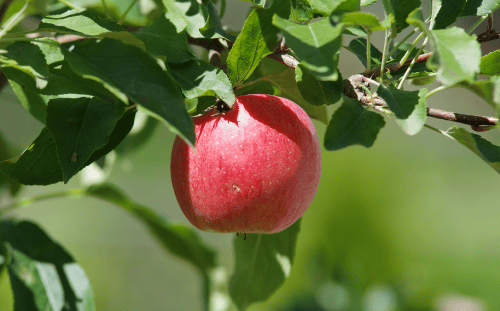
Do we see our circumstances in light of the steadfast love of God? Or do we doubt his promises in light of our circumstances? Which is more real to us? Faith does not demand naive optimism when faced with disappointment and uncertainty. It demands prayers like Psalm 89. Honest appeal to God in light of what he has promised, trusting as Spurgeon did, “When we cannot trace [God’s] hand, we must trust his heart.” Trust that meets trial with hope, as Luther did, saying, “Even if I knew that tomorrow the world would go to pieces, I would still plant my apple tree.”